
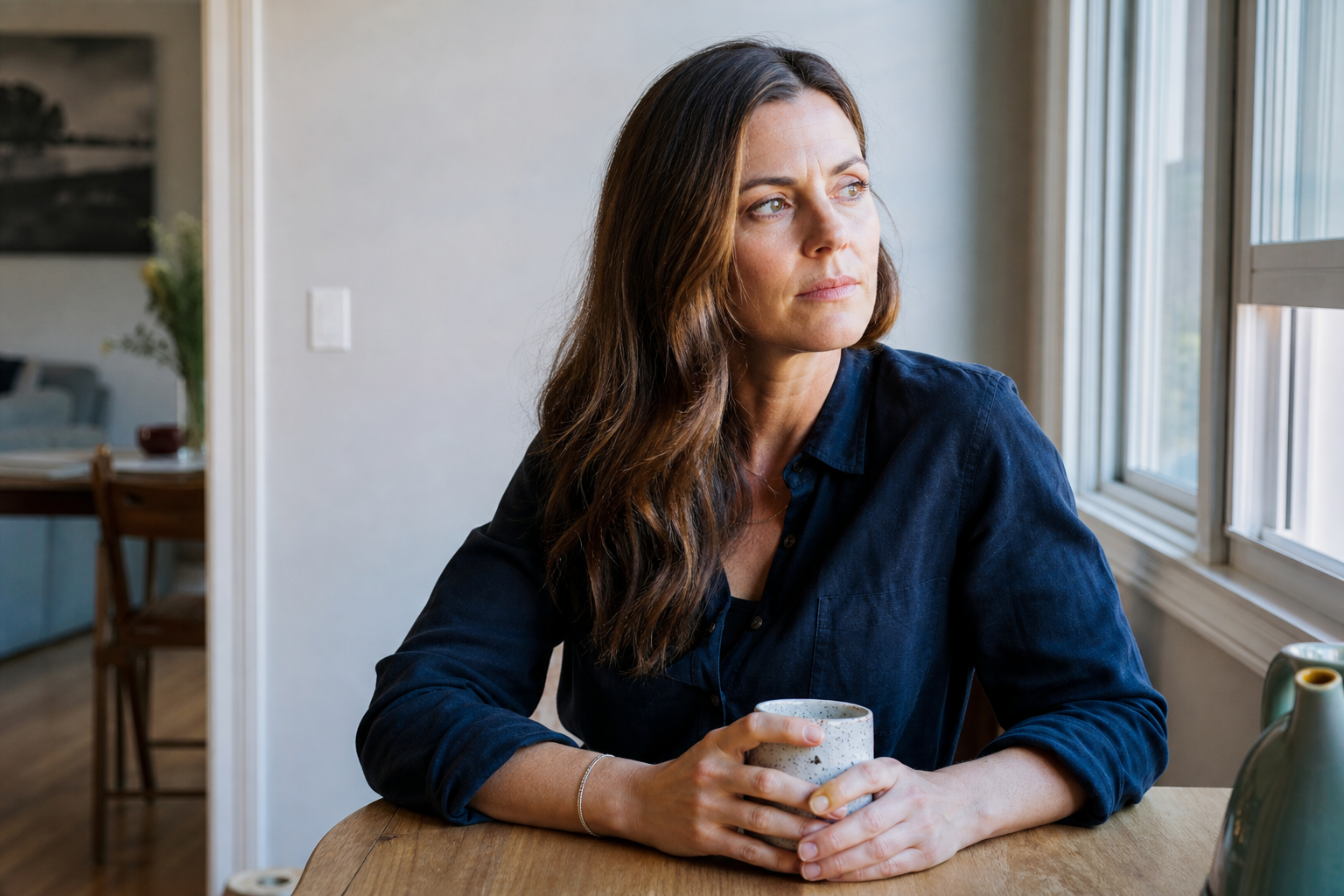
“I don’t understand what is happening: in theory, everything is fine.” This is a common thought when distress does not fit the outward picture of your life. The trap is often the demand for one immediate, obvious cause.
Anxiety is a human response to threat or uncertainty. It becomes a problem when fear or worry is intense, hard to control, persists and begins to interfere with everyday life. Feeling anxious does not by itself mean that you have an anxiety disorder; that distinction requires a professional assessment.
SourceWorld Health Organization, Anxiety disorders (2025)
01
No visible danger is required for the body to sound the alarm
Your alarm system does not respond only to external events. It can also react to anticipation, bodily sensations, memories, internal demands or uncertainty. This is why your circumstances may look stable while you feel on edge.
SourceWHO (2025)
An article cannot determine the cause of a symptom. If palpitations, pain, shortness of breath, dizziness or another sensation are new, intense or worrying, consult a healthcare professional to rule out other causes.
02
So why can it appear when everything seems fine?
There is no universal explanation. Evidence describes a complex interaction between social, psychological and biological factors. An assessment may reveal threads such as:
- Accumulated stress. The body may remain mobilised after the most demanding period has ended.
- Habitual worry. Anticipating problems can briefly feel like preparation while keeping attention focused on danger.
- High self-demand and difficulty stopping. Getting everything done does not mean that you feel well inside.
- Interpreting sensations. Monitoring the body and reading every change as threatening can amplify fear.
- Health, sleep and substances. Rest, medical conditions, caffeine, alcohol and medication should be considered with the appropriate professional.
SourceWHO (2025)
03
The cycle that can maintain anxiety
When you try to recover a sense of safety, it is understandable to avoid, check or seek reassurance. Immediate relief can reinforce these responses. Over time, there are fewer opportunities to discover that uncertainty or discomfort can be tolerated without them.
SourceWHO (2025); NICE CG113
04
What you can do today—without turning it into another demand
- 01Describe the experience precisely.
Instead of “I’m not okay”, try: “I notice pressure in my chest and my mind is anticipating”. Description does not erase anxiety, but it can reduce confusion.
- 02Notice what you do to feel safe.
Write down avoidance, checking, reassurance seeking or repeated analysis. The question is not whether they are “wrong”, but what effect they have now and later.
- 03Support the basics.
Regular sleep, movement, food, less alcohol and breathing or relaxation skills may support wellbeing; they do not replace an assessment when the problem persists.
- 04Gradually reclaim space in your life.
If fear has led you to stop doing things, a professional can help you plan appropriate, safe steps.
SourceWHO (2025)
05
What we do in therapy
The work does not begin with a formula or an assumed diagnosis. It begins with an individual assessment: when anxiety appears, what triggers it, what reduces it, what maintains it and how it affects your life.
In my online practice, we work to understand the pattern and recover flexibility. Depending on the person, this may include psychoeducation, reviewing habits and safety behaviours, regulation skills and gradual changes in how you face what currently activates the alarm.
Clinical guidelines recommend stepped care: begin with the least intrusive effective intervention and adjust intensity according to functional impact, previous response and personal preference. For generalised anxiety disorder, NICE includes cognitive behavioural therapy-based interventions and applied relaxation.
SourceNICE CG113; Papola et al., JAMA Psychiatry (2024)
participants were included in a review of psychotherapy trials for generalised anxiety disorder in adults. CBT and third-wave therapies were associated with symptom reduction compared with treatment as usual; the authors noted that long-term sustainability requires further study.
06
When to seek help
Consider seeking help if worry is difficult to control, lasts for months, disrupts sleep, occupies much of the day, leads you to avoid situations or interferes with work, relationships or self-care.
You do not need to wait until you feel “very unwell”. A consultation can help organise the experience, avoid simplistic explanations and decide on the next step. If there is immediate danger or thoughts of self-harm, contact emergency services in your country; in Spain, call 112 or the 024 helpline.
SourceWHO (2025); NICE CG113
07
Frequently asked questions
Is it normal to feel anxious without an obvious reason?+
Yes. Anxiety may appear even when no specific danger is identifiable. Biological, psychological and social factors may interact, and the body can remain on alert after visible pressure has eased.
Can anxiety cause physical symptoms?+
Yes. It may involve tension, palpitations, sweating, digestive discomfort, sleep problems or difficulty concentrating. New, intense or concerning symptoms should be medically assessed.
When should I seek professional help?+
When worry is difficult to control, persists for months, limits activities, disrupts sleep or affects work, relationships or wellbeing.
Can online therapy help with anxiety?+
Yes. Psychological interventions can be delivered in person or online. The appropriate format depends on the situation, preferences and professional assessment.
Source
Scientific and official references
- World Health Organization. Anxiety disorders. 2025.
- NICE. Generalised anxiety disorder and panic disorder in adults: management. CG113.
- Papola D, et al. JAMA Psychiatry. 2024;81(3):250–259.
- van Dis EAM, et al. JAMA Psychiatry. 2020;77(3):265–273.
Informational content; it does not replace a psychological or medical assessment. Wikipedia was not used.